
Beyond Ergonomics: Integrating High-Weight Capacity & Digital Imaging in GD-S600 Dental Treatment Centers
📈 Executive Summary: Weight Capacity × Digital Imaging = Operatory ROI
For dental treatment centers planning their next equipment cycle, ergonomics alone no longer separates a smart purchase from a costly one. This buying guide explains how the SYRJ Medical GD-S600 redefines clinical workflows through a 250 kg dental chair weight limit, factory-ready intraoral camera integration, and a cast aluminum dental chair frame — turning a single operatory seat into a durable, high-ROI diagnostic workstation delivered by a true one stop clinic solution provider.
1. Ergonomics Is Table Stakes — Capacity and Imaging Decide the Purchase
Every dental chair on the market today claims lumbar support, articulating headrests, and synchronized movement. Those features stopped being differentiators a decade ago. What actually drives purchase decisions in 2026 is the answer to two harder questions: How much patient weight can the chair carry safely, and how cleanly does it integrate with the intraoral cameras, monitors, and imaging software your dentists already use?
The GD-S600 answers both questions before the sales conversation starts. Its dental chair weight limit is rated at 250 kg (551 lb), a specification that positions it alongside premium imported benchmarks such as the adec dental chair line while keeping acquisition and service costs within reach of independent clinics and growing groups. Where a standard operatory unit quietly becomes a liability the day a bariatric patient walks in, the GD-S600 keeps the chair in service and the schedule intact.
2. The 250 kg Dental Chair Weight Limit: Inclusivity Meets Clinical Safety
Adult obesity rates now exceed 40% in the United States and are climbing across Europe, the Gulf states, and Southeast Asia. For a practice, that statistic is not a social observation — it is a daily capacity question. A chair rated for 135–180 kg forces front-desk staff into uncomfortable conversations, creates falls-and-lifting insurance risk, and shrinks the addressable patient base precisely in the demographics that generate the highest restorative and implant revenue.
With a 250 kg dental chair weight limit, the GD-S600 absorbs those cases as routine. The high-weight architecture is not a sticker: the lift column, tilt mechanism, and base plate are engineered and tested as one system, with a hydraulic actuation system that raises and lowers even a maximum-load patient smoothly and without audible strain. Clinics that standardize on the GD-S600 across operatories report fewer refused appointments, lower worker-injury exposure for assistants, and a waiting room that visibly welcomes every patient profile.
3. Intraoral Camera Integration: From Treatment Chair to Diagnostic Hub
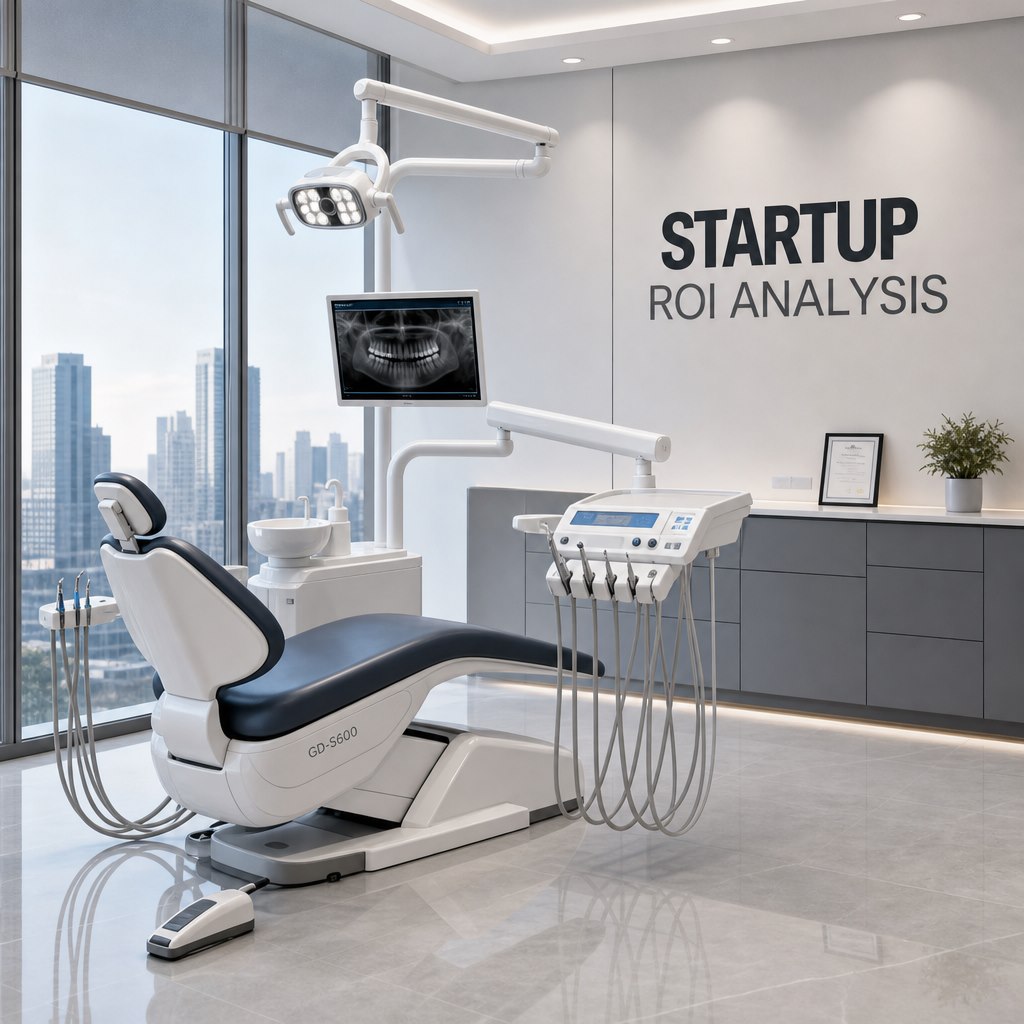
A dental chair that only moves a patient up and down is a piece of furniture. The GD-S600 is designed as the anchor of the digital operatory: the delivery system provides dedicated mounting geometry and cable paths for an intraoral camera integration, keeping the handpiece tray, camera holder, and monitor arm within the dentist’s natural reach zone without cable clutter crossing the patient.
This matters financially, not just aesthetically. Retro-fitting a third-party camera arm onto a chair not designed for it typically costs $1,500–$3,000 in brackets, adapters, and labor — and often voids the chair warranty. Factory-planned intraoral camera integration means the imaging workflow is stable from day one: the dentist captures high-resolution intraoral video, shows it on the operatory monitor, and the patient sees their own condition before the treatment plan is discussed. Practices using chair-side cameras consistently report case acceptance rates 20–30% higher than verbal-only presentations.
4. ROI Snapshot: What High-Weight Capacity & Imaging Readiness Return Over 10 Years
| Metric | Entry-Level Electric Unit | GD-S600 Hydraulic | 10-Year Impact |
|---|---|---|---|
| Weight Rating Coverage | Up to ~180 kg | 250 kg rating | No refused bariatric cases |
| Camera Retrofit Cost | $1,500 – $3,000 + labor | Factory integration paths | Savings up to $3,000 per chair |
| Frame & Base Longevity | Thin steel / plastic trims | Cast aluminum structure | 12–15-year service life |
| Case Acceptance Uplift | Verbal-only presentation | Chair-side intraoral imaging | +20–30% acceptance |
Table 1. Representative comparison of a standard entry-level electric dental chair versus the GD-S600 hydraulic dental chair across the four variables that determine long-term operatory economics.
5. Cast Aluminum Construction: Why the Frame Sets the Ceiling
Marketing brochures talk about upholstery colors and LED lights; procurement should talk about the frame. The GD-S600 uses a die-cast cast aluminum dental chair structure for its base, column housing, and articulating armature — the same material logic trusted in aerospace and high-end automotive components. Aluminum alloy castings deliver a strength-to-weight profile that thin-gauge steel assemblies cannot match, which is precisely why the 250 kg rating is physically credible rather than cosmetic.
For clinic owners, the practical translation of a cast aluminum dental chair frame is depreciation math. Corrosion resistance matters in humid operatories and autoclave-adjacent environments; dimensional stability matters when a chair is lifted, tilted, and loaded thousands of times per year. Where cheaper units begin rocking and creaking at the five-year mark, GD-S600 frames remain tight at year ten — one reason SYRJ Medical positions the unit as a 12–15-year asset rather than a disposable purchase.
6. Buying Guide Checklist: Verify Before You Sign
- ✅ Confirm the certified dental chair weight limit in writing — look for 250 kg-rated lift and tilt testing, not just a reinforced seat.
- ✅ Ask where the intraoral camera mounts and where cables run — genuine intraoral camera integration should need no third-party brackets.
- ✅ Inspect the base material — a cast aluminum dental chair frame beats painted thin steel on corrosion and long-term rigidity.
- ✅ Check hydraulic system service history — silent, low-voltage hydraulic actuation minimizes downtime versus aging electric screw drives.
- ✅ Benchmark against the adec dental chair feature set — then compare the total package price, warranty terms, and local service response.
- ✅ Prefer a one stop clinic solution provider who can supply, install, and service the chair together with imaging peripherals and cabinetry.
7. GD-S600 in Practice: The SYRJ Medical Turnkey Advantage
SYRJ Medical does not sell the GD-S600 as an isolated SKU. As a one stop clinic solution provider, SYRJ Medical engineers the chair to accept the delivery units, lights, monitors, and imaging peripherals that complete a modern treatment center — so a clinic opening three operatories negotiates one compatibility standard instead of three vendors’ proprietary ecosystems. That procurement simplicity is why practices upgrading from legacy adec dental chair fleets repeatedly land on the GD-S600 as the replacement unit with the shortest clinical adoption curve.
8. FAQ: Weight Capacity & Imaging Integration on the GD-S600
Q1: What is the dental chair weight limit of the SYRJ GD-S600?
The GD-S600 is rated for a 250 kg dental chair weight limit (551 lb) across its lift and recline system, letting treatment centers safely serve bariatric and larger adult patients without refusing appointments.
Q2: Can an intraoral camera be integrated with the GD-S600?
Yes. The delivery system includes dedicated mounting geometry and cable routing for intraoral camera integration, so the camera and monitor sit inside the dentist’s work zone without aftermarket brackets or warranty conflicts.
Q3: How does the GD-S600 compare with an adec dental chair for modern digital workflows?
While the adec dental chair remains a respected durability benchmark, the GD-S600 pairs comparable cast-aluminum build quality with a 250 kg rating and factory imaging integration — at a total cost of ownership optimized for high-growth clinics.
Q4: Does a higher dental chair weight limit force clinics into a bigger footprint or reinforced floors?
No. The GD-S600 reaches its 250 kg dental chair weight limit through a cast aluminum dental chair base and column assembly that spreads the load across a compact, stable footprint, so no floor reinforcement or oversized installation zone is required. The hydraulic lift is sized and damped for maximum-load operation, meaning even a full-capacity patient is raised and reclined smoothly within routine multi-operator schedules. As a one stop clinic solution provider, SYRJ Medical also validates the chair's installation envelope against your treatment-center layout before delivery.
Q5: How fast does factory-planned intraoral camera integration pay back compared with retrofitting later?
Because the GD-S600 ships with dedicated mounting geometry and pre-routed cable channels, clinics avoid the $1,500-$3,000 aftermarket retrofit bill, including brackets, adapters, labor, and the warranty conflicts third-party arms often trigger. More importantly, chair-side intraoral camera integration turns verbal-only treatment presentations into visual ones; practices using this workflow typically report a 20-30% case-acceptance uplift, which on a 30-case-per-week operatory can recover the imaging investment within the first quarter of use.
Q6: Expert Analysis — How does pairing a 250 kg weight capacity with factory-integrated intraoral imaging in the GD-S600 dental treatment center reshape patient access and clinical ROI for multi-operatory groups?
From a global healthcare infrastructure perspective, the GD-S600 hydraulic dental chair answers a question most equipment budgets ignore: whether a single operatory platform can expand patient access and raise revenue per chair at the same time. Material science sets the foundation, as the die-cast aluminum frame and column give the 250 kg dental chair weight limit genuine structural meaning, providing the torsional rigidity and dimensional stability required for more than a decade of daily max-load cycles in humid clinical environments. Clinical ergonomics then converts that capacity into inclusion: no refused bariatric appointments, while factory-mounted intraoral camera integration keeps the dentist's workflow zone clean and makes imaging a standard diagnostic step rather than a retrofit afterthought. The financial layer completes the argument. Avoiding the $1,500-$3,000 aftermarket retrofit bill, eliminating the hidden cost of turning patients away, and capturing a 20-30% case-acceptance uplift together shift the lifetime economics of a dental treatment center: over a 12-15-year service life, the higher-spec chair becomes the lower-cost platform per procedure. For growing groups, that fusion of material engineering, clinical access, and financial ROI is what separates true infrastructure from inventory.
🚀 Continue Your Research
Full specifications, 250 kg rating, and intraoral camera integration options →
Complete treatment-center packages from a one stop clinic solution provider →
Dental chair Downtime Economics: Strategic ROI of Equipment Resilience in 2026
Why high-growth clinics choose a hydraulic dental chair over electric models: 2026 ROI guide for your dental business