
Dental chair: Breaking the Premium Bias — Engineering Standards vs. Brand Luxury
Dental chair engineering: beyond the brand premium
Dental chair procurement in 2026 is moving from logo-based buying to measurable engineering and lifecycle value. This insight compares the structural logic of the adec dental chair with the high-pressure cast aluminum dental chair approach used in the GD-S300. As a one stop clinic solution provider, SYRJ Medical helps clinics evaluate durability, digital readiness, serviceability, and total cost before selecting a complete operatory system.
Dental chair: Breaking the Premium Bias — Engineering Standards vs. Brand Luxury
The Dental chair is the operating center of a modern dental clinic. It determines how clinicians position patients, how assistants move around the operatory, how digital equipment is connected, and how consistently a practice can deliver treatment. Yet many procurement decisions still begin with brand recognition rather than engineering evidence. This creates a premium bias: buyers assume that a higher list price automatically means better workflow, longer service life, and stronger clinical outcomes.
A more useful approach is to compare the engineering standards behind each unit. When a clinic evaluates an adec dental chair, it should examine the chassis material, movement precision, control architecture, service model, and total cost of ownership. The same framework can then be applied to the GD-S300, GD-S600, and GD-S800 systems from SYRJ Medical. This is not simply a price comparison. It is a practical method for separating useful clinical performance from the cost of legacy positioning.
Why the premium bias is changing
Premium brands have traditionally earned trust through long market presence, refined ergonomics, and established distributor networks. These factors remain relevant, but they do not remove the need for technical verification. A clinic owner should still ask what is inside the base, how the chair behaves after years of daily movement, whether replacement parts are accessible, and whether the system can adapt to new imaging or diagnostic equipment.
The question is especially important for startup clinics and regional groups. These buyers may need to Buy dental chair online, compare Portable dental chair price, or evaluate an Ergonomic dental treatment center for sale while working with a strict launch budget. The correct choice is not always the cheapest unit or the most expensive name. It is the unit that provides reliable clinical function while protecting future cash flow.
Material science: why the chassis matters
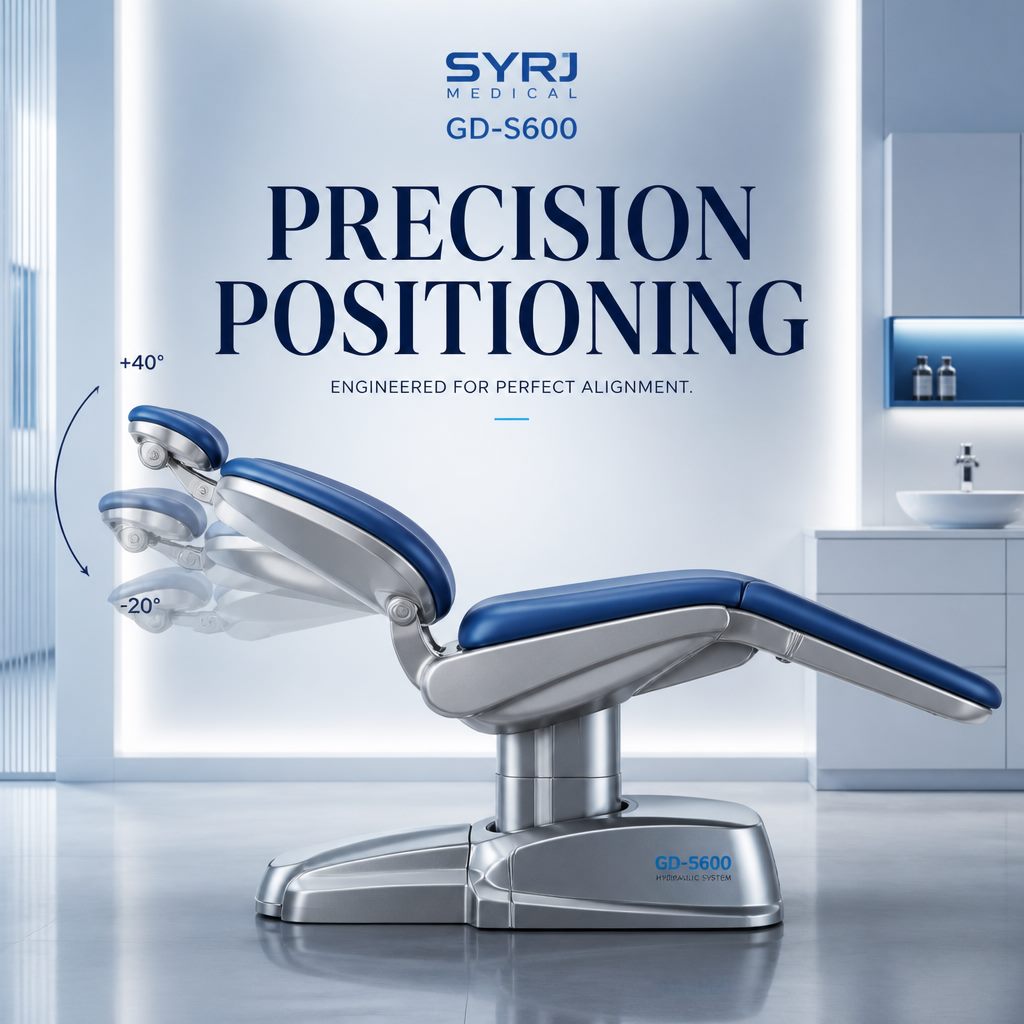
The chassis carries the patient, supports repeated movement, and affects the stability of the working field. Painted steel can be practical in controlled environments, but humidity, cleaning chemicals, and long-term wear may increase the risk of corrosion. For clinics in coastal, tropical, or high-humidity markets, the frame material should be treated as a long-term operating decision rather than a cosmetic specification.
A cast aluminum dental chair uses a formed structural base that combines rigidity with corrosion resistance. The GD-S300 design applies high-pressure cast aluminum to key support areas and pairs the structure with integrated movement components. This can help maintain alignment, reduce the risk of rust-related deterioration, and support predictable servicing. The material choice should still be verified against the supplier's technical documentation, warranty terms, and local service conditions, but it gives buyers a clearer engineering benchmark than surface appearance alone.
This is where a professional comparison with the adec dental chair becomes useful. The goal is to examine material integrity and clinical behavior side by side, not to rely on a logo. Buyers can compare base construction, lifting stability, backrest movement, upholstery replacement, and access to spare parts. A well-specified cast aluminum frame can provide a durable foundation for a small operatory or a multi-room deployment.
Digital readiness is part of performance
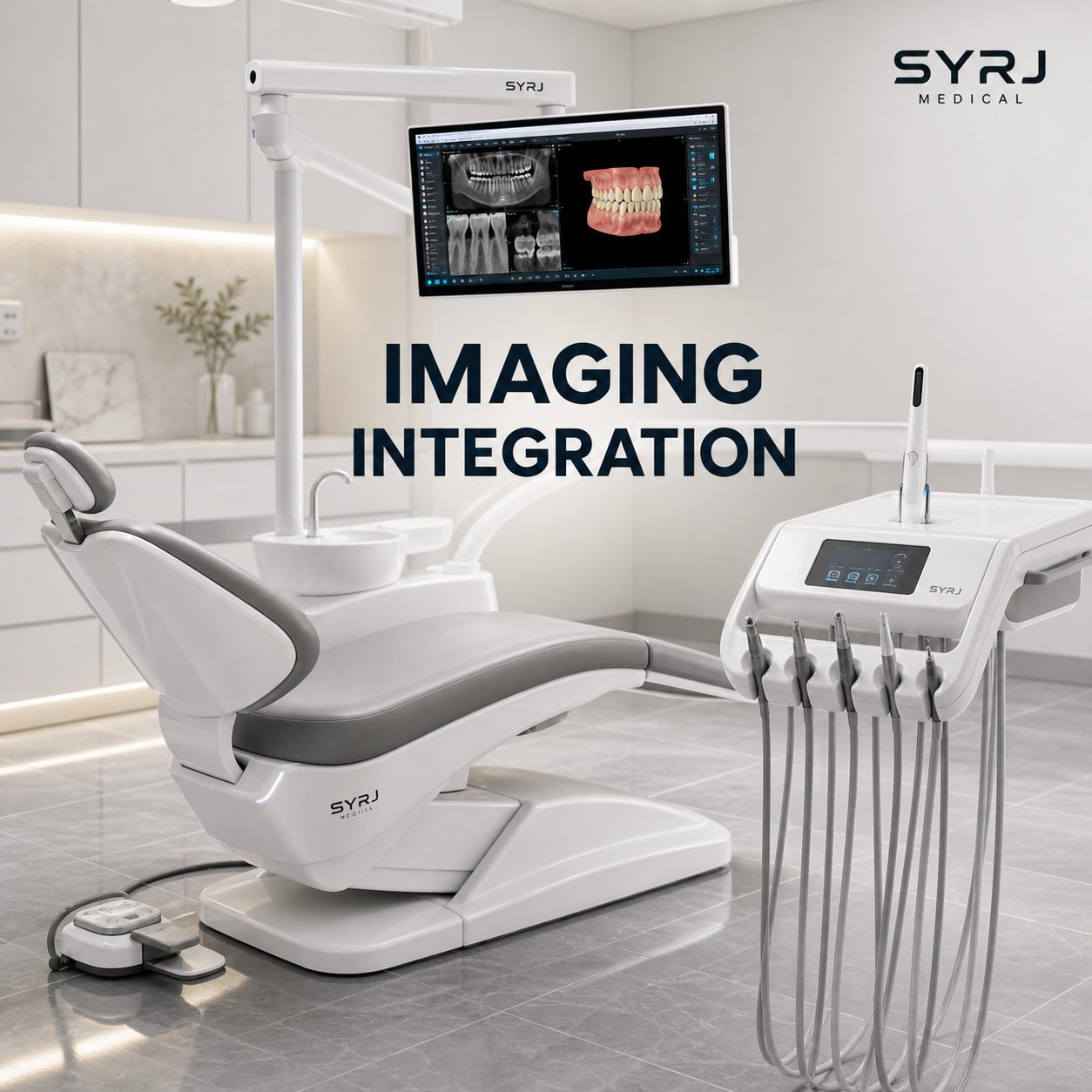
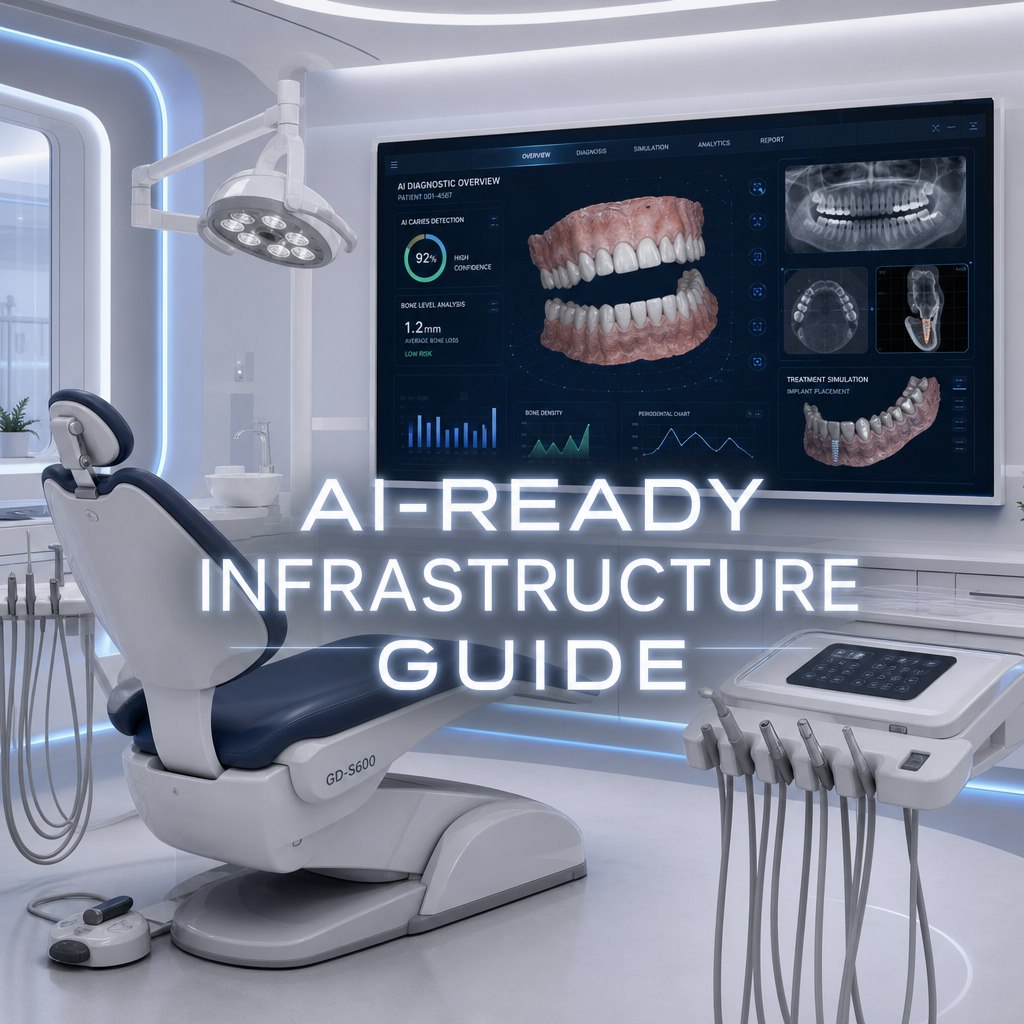
A modern Dental chair is no longer an isolated mechanical device. It sits within a workflow that may include intraoral cameras, imaging sensors, treatment lights, practice software, and AI-assisted diagnostic tools. A chair that cannot accommodate future integrations may create another round of capital expenditure when the practice expands.
The GD-S300 platform is positioned around an open integration approach, while the GD-S600 and GD-S800 extend the product range for clinics with broader workflow and comfort requirements. Buyers should ask which interfaces are available, what third-party equipment has been tested, and whether upgrades require proprietary components. These questions are more valuable than a generic statement that a system is "digital."
For an international clinic project, SYRJ Medical can act as a one stop clinic solution provider by coordinating the chair, imaging, suction, air supply, sterilization, and installation requirements. This reduces the risk of buying separate components that work individually but create compatibility problems when combined on site.
Total cost of ownership beats the invoice price
When a buyer asks, "How much does a dental chair cost?", the answer should include more than the purchase price. A useful five-year model includes freight, installation, training, scheduled maintenance, replacement parts, downtime, upholstery service, and the cost of future upgrades. A chair with a lower invoice may become expensive if it requires frequent service or has difficult-to-source components.
A one stop clinic turnkey solution provider can improve cost visibility by presenting the equipment package, installation requirements, and after-sales scope together. The buyer can then compare a complete deployment rather than comparing one chair price with another chair price that excludes essential peripherals.
The same principle applies to financing. Clinics considering dental equipment financing or dental equipment finance should evaluate the monthly payment alongside expected uptime and expansion requirements. Preserving cash for imaging, staff training, and patient acquisition can be more valuable than paying for a premium badge if the underlying clinical requirements are already satisfied.
Serviceability and regional procurement
Service support is a core part of engineering value. Before selecting a Dental chair manufacturer in China or an overseas premium supplier, buyers should request spare-parts lists, warranty coverage, technician training details, response procedures, and references from comparable installations. A professional supplier should explain which parts are consumable, which modules can be replaced locally, and how technical support is delivered across borders.
Regional conditions also matter. A clinic in Nigeria, South Africa, the UAE, Brazil, or Southeast Asia may face different humidity, voltage, shipping, and technician availability challenges. The supplier should therefore confirm the correct electrical configuration, packaging, documentation, and service plan before shipment. A one-vendor coordination model can reduce communication gaps, but the scope must be written clearly in the quotation and contract.
A practical engineering comparison framework
Use the following questions when comparing the GD-S300 with an adec dental chair or another premium system:
- What structural material is used in the base and support arms?
- How does the chair maintain stability during repeated lifting and reclining?
- Which digital interfaces are available for imaging and future upgrades?
- What is included in the quoted price: chair, light, delivery, installation, training, and warranty?
- How quickly can replacement parts be supplied to the destination market?
- Can the supplier provide a complete operatory package instead of a standalone unit?
- What evidence supports the claimed service life and maintenance schedule?
These questions move the decision from brand familiarity to verifiable performance. They also help a clinic compare a premium unit, a cast aluminum dental chair, and a complete turnkey package on the same basis.
Conclusion: choose evidence over assumption
The premium dental equipment market is not disappearing; it is becoming more transparent. Established brands continue to offer recognized design and support systems, while specialist manufacturers are improving material quality, digital integration, and global project coordination. For buyers, the smart decision is to compare the engineering and lifecycle value of each system rather than treating price as a proxy for quality.
The GD-S300, GD-S600, and GD-S800 give clinics a structured range of options for different workflows and investment stages. SYRJ Medical supports this decision through a one stop clinic solution provider model that connects equipment selection with integration, deployment, and after-sales planning. Whether the project requires a compact startup operatory or a larger multi-room installation, a rigorous Dental chair comparison can protect both clinical performance and long-term ROI.
| Evaluation factor | Premium reference system | GD-S300 evaluation route |
|---|---|---|
| Chassis review | Verify aluminum construction and service scope | High-pressure cast aluminum support structure |
| Digital readiness | Confirm interfaces and upgrade costs | Open integration route for future equipment |
| TCO inputs | Price, parts, downtime, warranty | Package, parts, training, logistics, warranty |
| Project fit | Best assessed against clinic workflow | Startup and multi-room package planning |
Expert FAQ
Q1: What should buyers check before they Buy dental chair online?
A: Buyers should verify the full specification, structural material, electrical configuration, included components, shipping terms, installation scope, warranty, and after-sales process before placing an online order. A reliable supplier should provide technical documents and a clear quotation rather than presenting only a product photograph and headline price.
Q2: How should a clinic evaluate Portable dental chair price against a fixed operatory system?
A: Compare the intended use rather than the advertised price alone. A portable unit may suit mobile care or temporary treatment, while a fixed cast aluminum dental chair is generally evaluated for stability, repeated daily positioning, digital integration, and long-term operatory productivity. Freight, accessories, setup, and maintenance should be included in the calculation.
Q3: What makes an Ergonomic dental treatment center for sale suitable for a high-humidity market?
A: The buyer should examine the chassis material, corrosion protection, tubing, valves, electrical enclosure, upholstery, and maintenance instructions. A cast aluminum structure can reduce corrosion concerns, but the complete system still needs appropriate cleaning procedures, installation protection, and local service support for the environment where it will operate.
Q4: Why choose SYRJ Medical as a Dental chair manufacturer in China and one stop clinic solution provider?
A: The value is project coordination. A qualified Dental chair manufacturer in China can combine chair systems with imaging, suction, air supply, sterilization, and installation planning. Working with SYRJ Medical as a one stop clinic solution provider gives the buyer one technical discussion, one coordinated package, and a clearer after-sales responsibility structure.
Q5: What is the benefit of a one stop clinic turnkey solution provider for a new dental practice?
A: A one stop clinic turnkey solution provider helps reduce the compatibility and coordination problems that occur when every component is sourced separately. The supplier can align the Dental chair, clinical peripherals, room layout, delivery schedule, training, and after-sales plan. The buyer should still request a detailed scope of supply and confirm which services are included.
Q6: Expert Analysis: Is brand luxury still the most reliable indicator of Dental chair performance?
A: Brand history can provide useful evidence about design maturity and service coverage, but it should not replace technical evaluation. Clinical performance is shaped by material integrity, movement control, ergonomic access, hygiene design, digital compatibility, and the supplier's ability to keep the unit operational. A premium name may be appropriate for one project, while a well-documented cast aluminum system may provide better lifecycle value for another. The most rational decision combines verified specifications, realistic service assumptions, patient and clinician workflow requirements, and a transparent total-cost model. In this context, comparing an adec dental chair with a GD-S300, GD-S600, or GD-S800 should focus on measurable operating requirements rather than prestige alone.
Dental chair: The Startup Equipment Checklist — Choosing GDS vs adec for Day 1 Success
Best Dental Chair Brands: How to Choose ROI-Focused Models for Small Clinics