
How to Evaluate Dental Equipment Manufacturers: Compliance, OEM, Quality, and Supply Chain Guide

How to Evaluate Dental Equipment Manufacturers: Compliance, OEM, Quality, and Supply Chain Guide
Dental Equipment Manufacturers: Compliance, OEM, Quality, and Supply Chain Guide
Visual Summary
Choosing among dental equipment manufacturers is not a matter of comparing the lowest quotation. A reliable sourcing decision connects regulatory documentation, manufacturing capability, product scope, production planning, spare-parts continuity, and cross-border support. Buyers should verify what a supplier can actually prove before requesting samples or committing to a long-term OEM or wholesale program.
This guide presents a structured evaluation path for distributors, importers, dental groups, and private-label buyers. It covers the difference between catalog wholesale and custom manufacturing, the documents that should be checked, the factory processes that deserve evidence, and the commercial terms that influence total ownership cost.
Contents
- Define the supplier relationship before comparing quotations
- Verify compliance and technical documentation
- Audit materials, tooling, and factory quality systems
- Compare MOQ, lead times, pricing, and delivery stability
- Test spare-parts and cross-border after-sales capability
- Match supplier capability to the product portfolio
- Use a final supplier scorecard before sampling or ordering
1. Define What You Need From a Dental Equipment Manufacturer
The phrase Dental equipment manufacturer can describe several different supplier relationships. A distributor may need standard catalog products, a private label, a modified existing platform, or a fully engineered product. These options have different documentation, tooling, MOQ, and validation requirements.
A Dental instruments manufacturer may specialize in hand instruments, surgical sets, or precision components, while an equipment supplier may focus on chairs, imaging, sterilization, or complete operatory systems. Before contacting suppliers, define the product category, target market, intended users, branding needs, annual demand, service expectations, and regulatory pathway.
Wholesale, OEM, and ODM are not the same
A Dental equipment wholesale supplier normally provides existing catalog products in volume. This route may be appropriate when the buyer wants fast sampling, a broad product range, and lower customization risk. An OEM project generally requires the supplier to build to the buyer’s specifications or approved design. An ODM project usually starts from an existing supplier platform with agreed modifications, branding, packaging, or configuration changes.
An OEM/ODM dental partner should explain which parts of the design, documentation, tooling, testing, and regulatory responsibility belong to each party. If the supplier describes every project as “fully custom” without showing a controlled process, ask for a clearer boundary between standard product, modified product, and new development.
A Custom dental manufacturing company should also be able to explain design review, prototype approval, change control, and production release. For a Private label dental equipment supplier, confirm who owns artwork, packaging files, molds, technical files, and approved product versions.
2. Verify Regulatory and Quality Documentation Before Sampling
Regulatory review should happen before price negotiation becomes the main focus. The correct documents depend on the product, destination market, risk classification, intended use, and importer responsibilities. A certificate shown on a website is not enough; buyers should verify its scope, validity, issuing body, product family, and legal manufacturer.
ISO 13485 medical device quality management
An ISO 13485 medical device quality management certificate can indicate that a supplier operates a medical-device quality management system within a defined scope. Buyers should check whether the scope covers the products being considered and whether the certificate is current. It should not be treated as proof that every product is automatically compliant in every market.
CE Mark / EU MDR compliance
For applicable products entering the European market, CE Mark / EU MDR compliance requires a product-specific regulatory pathway. Review the Declaration of Conformity, technical documentation responsibilities, risk-management evidence, clinical evaluation requirements, and any notified-body involvement that applies. A generic CE logo without matching product documentation is not sufficient evidence.
FDA 510(k) clearance & registration
For applicable products entering the United States, FDA 510(k) clearance & registration must be assessed according to device classification and regulatory status. Buyers should distinguish clearance, registration, listing, and establishment obligations. Ask which legal entity holds the relevant record and whether the exact model and intended use match the proposed product.
Good Manufacturing Practice (GMP) and declarations
Good Manufacturing Practice (GMP) controls, internal procedures, calibration, training, sanitation, and documented production discipline may be relevant depending on the product category and jurisdiction. Also request current Declarations of Conformity and applicable test reports. The document set should be consistent across quotations, labels, manuals, packaging, and shipment paperwork.
Product traceability & batch control numbers
A mature supplier should support Product traceability & batch control numbers or another documented method for linking raw materials, production records, inspection results, finished goods, and shipment lots. Ask how the supplier handles complaints, corrective actions, recalls, and warranty investigations. Traceability is especially important when multiple product versions or private-label labels are involved.
3. Audit Materials, Processes, and Manufacturing Engineering
A sample can show what a product looks like; it does not prove that every production batch will match it. Buyers should ask for process evidence, inspection records, material specifications, and a clear explanation of how critical characteristics are controlled.

*Visual reference: A documented production flow connects manufacturing, inspection, packaging, and final testing.*
CNC machining and precision grinding
For instruments, handpieces, and precision components, CNC machining and precision grinding may influence dimensional consistency, fit, surface quality, and repeatability. Ask which components are machined internally, which are outsourced, how programs are controlled, and how inspection results are recorded. A supplier should connect the process to the product’s actual critical dimensions instead of listing equipment without evidence.
High-grade raw materials (surgical stainless steel/titanium)
High-grade raw materials (surgical stainless steel/titanium) should be supported by material certificates, grade identification, incoming inspection, and a defined application. Do not assume that a material label alone proves corrosion resistance, sterilization suitability, fatigue performance, or clinical appropriateness. For reusable instruments, review the cleaning, sterilization, surface, and maintenance conditions relevant to the intended market.

*Visual reference: A grouped dental instrument display helps buyers review product range, finish, handling, and sterilization requirements.*
Heat treatment and anti-corrosion finishing
Heat treatment and anti-corrosion finishing can affect hardness, wear resistance, surface stability, and service life. Ask which steps are performed, what parameters are controlled, and how the finished surface is inspected. For products exposed to repeated sterilization or chemical cleaning, request evidence that the finishing process matches the intended use.
Factory quality control systems (IQC, IPQC, OQC)
A useful audit should map Factory quality control systems (IQC, IPQC, OQC):
- IQC: incoming quality control for materials and components.
- IPQC: in-process checks at critical manufacturing stages.
- OQC: outgoing quality control before packing and dispatch.
Ask for sample inspection forms, acceptance criteria, calibration records, nonconformance handling, and corrective-action examples. The objective is not to collect paperwork; it is to see whether quality decisions are repeatable and traceable.
OEM private molds & customized tooling
For custom projects, OEM private molds & customized tooling require clear ownership, maintenance, storage, access, change control, and end-of-project arrangements. Confirm whether tooling is exclusive, how wear is managed, and whether a design change triggers a new validation cycle. These details affect cost, lead time, and the buyer’s ability to change suppliers later.
Design for Manufacturability (DFM)
Design for Manufacturability (DFM) should happen before a custom design is frozen. The supplier should review tolerances, assembly steps, material availability, inspection points, packaging, serviceability, and production risks. DFM is not permission to change the buyer’s clinical requirements; it is a structured way to identify manufacturing problems before they become tooling, rework, or warranty problems.
4. Compare Commercial Terms and Supply Stability
The best quotation is not always the lowest unit price. Compare the full commercial model, including sample charges, tooling, packaging, documentation, inspection, shipping preparation, spare parts, warranty obligations, and payment milestones.
Minimum Order Quantity (MOQ)
Clarify Minimum Order Quantity (MOQ) by product, configuration, color, packaging version, and private-label SKU. A low MOQ can support market testing, while a high MOQ may lower unit cost but increase inventory exposure. Ask whether the MOQ applies to one order, one production run, or one artwork and packaging setup.
Production lead times and delivery stability
Production lead times and delivery stability should be measured from a defined milestone: purchase-order confirmation, artwork approval, deposit receipt, sample approval, or tooling release. Ask how delays are communicated, which inputs the buyer must provide, and how the supplier prioritizes urgent orders during peak periods. A written production schedule is more useful than an unqualified promise of fast delivery.
Bulk purchase wholesale pricing tiers
Request Bulk purchase wholesale pricing tiers with clear volume breaks and included services. Compare whether the price changes because of quantity, configuration, material, packaging, quality level, or shipping terms. Ask for a total landed-cost model so that a low factory price does not hide higher inspection, repair, or documentation costs.
Private label packaging and branding support
Private label packaging and branding support should cover artwork requirements, proof approval, translation, label regulations, carton markings, manuals, barcode ownership, and version control. Confirm whether branding is applied to the product, packaging, documentation, or all three. A supplier that cannot control artwork revisions may create mixed branding in the same shipment.
5. Test Spare Parts and Cross-Border Support Before Ordering
A long-term partnership is tested after the first shipment. Ask for a model-specific spare-parts list, replacement process, warranty exclusions, service manuals, troubleshooting guidance, and escalation contacts before placing a large order.
Spare-parts availability and replacement timelines
Spare-parts availability and replacement timelines should cover common wear parts, critical electronic or mechanical assemblies, consumables, and products that may be discontinued. Ask whether parts are stocked, made to order, or sourced from third parties. Confirm the response process for urgent failures and whether replacement parts can be identified by model, revision, or batch.
Cross-border after-sales support & warranty policy
A clear Cross-border after-sales support & warranty policy should define the warranty period, covered components, labor responsibility, shipping responsibility, evidence required for a claim, response target, and repair or replacement process. Also confirm language support, time-zone coverage, remote troubleshooting, installation guidance, and local service expectations. A distributor should know exactly what happens when a product fails in an end customer’s clinic.
6. Match the Manufacturer to the Product Portfolio
Supplier capability should match the product category rather than the size of the catalog. A focused supplier with evidence in one product family may be safer than a listing that claims to cover every dental category without showing technical depth.
Dental chairs and treatment units
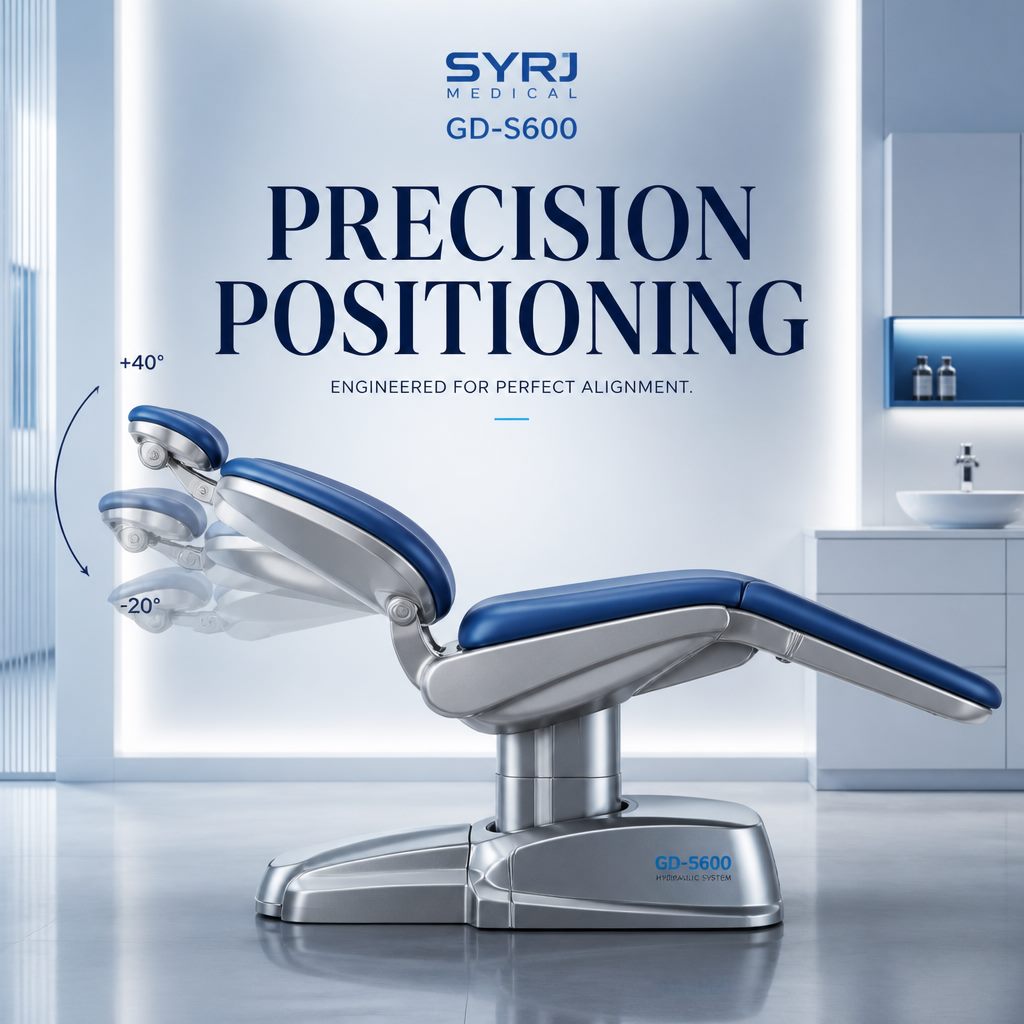
Dental chairs and treatment units require review of structure, motion systems, upholstery, control interfaces, accessories, installation requirements, service access, and replacement parts. Confirm whether the supplier provides installation documents, configuration drawings, training, and support for the destination market.
High-speed and low-speed dental handpieces
High-speed and low-speed dental handpieces require attention to bearings, turbines, cooling, vibration, chuck or bur retention, sterilization, maintenance, and spare cartridges or components. Buyers should request performance criteria and service procedures rather than relying only on exterior appearance.
Dental diagnostic & surgical instruments
Dental diagnostic & surgical instruments may include mirrors, probes, scalers, curettes, forceps, elevators, implant instruments, and specialty sets. Evaluate material grade, edge or tip geometry, surface finish, balance, sterilization compatibility, packaging, and batch consistency.
Dental imaging and X-ray systems
Dental imaging and X-ray systems require a separate review of intended use, local regulatory requirements, installation conditions, software, radiation-safety responsibilities, service, calibration, and data integration. Do not assume that a supplier experienced in hand instruments has the same competence in imaging equipment.

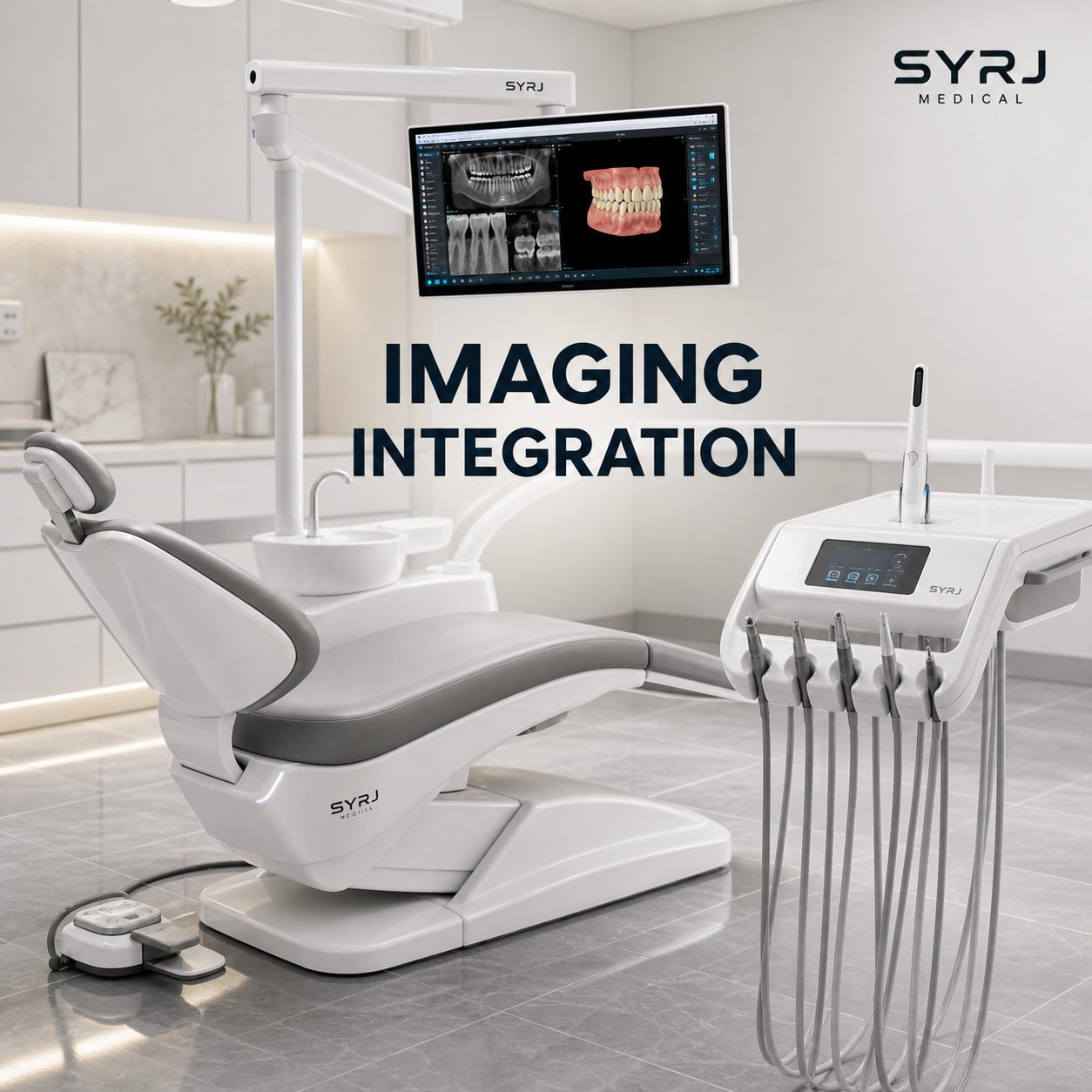
*Visual reference: Imaging equipment evaluation should include installation, positioning, operator workflow, service, and regulatory responsibilities.*
Dental infection control equipment (Autoclaves / Sterilizers)
Dental infection control equipment (Autoclaves / Sterilizers) should be assessed for cycle validation, monitoring, maintenance, consumables, documentation, installation, and user training. Confirm that the supplier can support the standards and service obligations of the destination market.
7. A Practical Supplier Scorecard
Use a weighted scorecard before sampling or signing a framework agreement:
| Evaluation area | Evidence to request | Risk if unclear |
|---|---|---|
| Regulatory scope | Current certificates, DoC, product-specific technical documents | Import delay or compliance exposure |
| Quality system | IQC/IPQC/OQC records, calibration, corrective actions | Batch inconsistency |
| Materials and process | Material certificates, machining and finishing controls | Corrosion, wear, or fit issues |
| OEM/ODM readiness | Design workflow, tooling ownership, artwork control | Rework, lock-in, or brand errors |
| Capacity and MOQ | Production plan, order backlog, MOQ by SKU | Stockouts or excess inventory |
| Delivery | Milestones, delay policy, packing and export documents | Missed launch or shipment windows |
| Spare parts | Model-specific list and replacement timelines | Extended customer downtime |
| Warranty and support | Written warranty, escalation route, service manuals | Unresolved field failures |
| Product fit | Category-specific samples and documentation | Capability mismatch |
| Long-term partnership | Communication, improvement, change control | Repeated sourcing friction |
Conclusion
The strongest dental equipment manufacturers make their capability visible through evidence: current documentation, controlled processes, realistic capacity plans, clear OEM/ODM boundaries, stable delivery, and responsive after-sales support. Buyers should not treat a polished catalog or low initial quotation as proof of long-term reliability.
A disciplined review begins with the required product and market, verifies compliance, audits manufacturing controls, defines commercial terms, and tests spare-parts continuity before the first large order. For a complex clinic or multi-category project, SYRJ Medical acts as a solution provider and integrator: products are sourced from selected suppliers, coordinated around the customer’s requirements, and evaluated for deployment, documentation, and total ownership considerations. The value is selection and integration, not a claim that SYRJ Medical manufactures every component.
Frequently Asked Questions
What should I verify before choosing a dental equipment manufacturer?
Verify product-specific regulatory documents, quality-system scope, manufacturing processes, materials, capacity, MOQ, lead times, spare-parts support, warranty terms, export documentation, and communication practices. Request evidence before sampling whenever possible.
What is the difference between an OEM/ODM dental partner and a wholesale supplier?
A wholesale supplier normally provides existing catalog products in volume. An OEM partner builds to approved buyer specifications, while an ODM partner adapts an existing platform. The difference affects tooling, design ownership, validation, MOQ, documentation, and lead time.
How can I assess ISO and CE documentation from a supplier?
Check the certificate validity, issuing body, scope, legal manufacturer, product family, and destination-market requirements. For applicable European products, review the Declaration of Conformity and EU MDR pathway. For applicable U.S. products, verify the relevant FDA status and responsible entity. Do not accept a logo or generic certificate without product-specific context.
What questions should I ask about MOQ and production lead times?
Ask how MOQ is calculated by SKU, configuration, color, packaging, and artwork. Define when lead time starts and ends, which buyer approvals affect the schedule, how delays are reported, and what capacity is reserved for repeat orders. Compare the full production and delivery plan rather than one promised date.
Why are spare parts and warranty terms important for distributors?
A product failure affects the distributor’s customer relationship, not only the original transaction. A model-specific spare-parts list, replacement timeline, service manual, warranty process, and escalation contact help reduce downtime and make after-sales costs predictable.
Expert Analysis: How should a buyer balance compliance, factory capability, and total ownership cost?
A buyer should treat supplier selection as a risk-allocation decision. Compliance evidence reduces the probability of market-entry problems, but it does not prove consistent manufacturing. Factory capability reduces batch and delivery risk, but it does not guarantee that the supplier’s product range fits the buyer’s clinical or distribution strategy. Total ownership cost then connects acquisition, inspection, documentation, freight preparation, training, spare parts, warranty handling, downtime, and replacement planning. The most reliable evaluation therefore moves in sequence: define the intended product and market, verify the relevant regulatory pathway, audit the controls that affect critical characteristics, test the supplier’s response with realistic documentation requests, and model the after-sales process before scaling volume. For OEM and private-label programs, design changes and tooling ownership deserve special attention because they can create long-term lock-in. A supplier becomes a strategic partner only when it can maintain product identity, documentation, delivery stability, and support continuity across repeated orders. This is why a lower unit price should be treated as one input, not the final decision rule.
Continue Your Sourcing Review
Integrated Digital Dental Solutions
Connect selected equipment, clinical workflows, and implementation planning.
Explore Digital Dental Integration →Dental Imaging Equipment
Review imaging-focused equipment options for diagnostic workflows and clinic deployment.
Review Dental Imaging Equipment →
Hydraulic vs electric dental chair cost analysis: Technical TCO guide for high-volume clinics