
Dental chair startup costs: Managing financing via GDS600 integrated hub | SYRJ Medical
Dental chair startup costs: Managing financing via GDS600 integrated hub
Operational Insight: Securing Your Clinic's Foundation
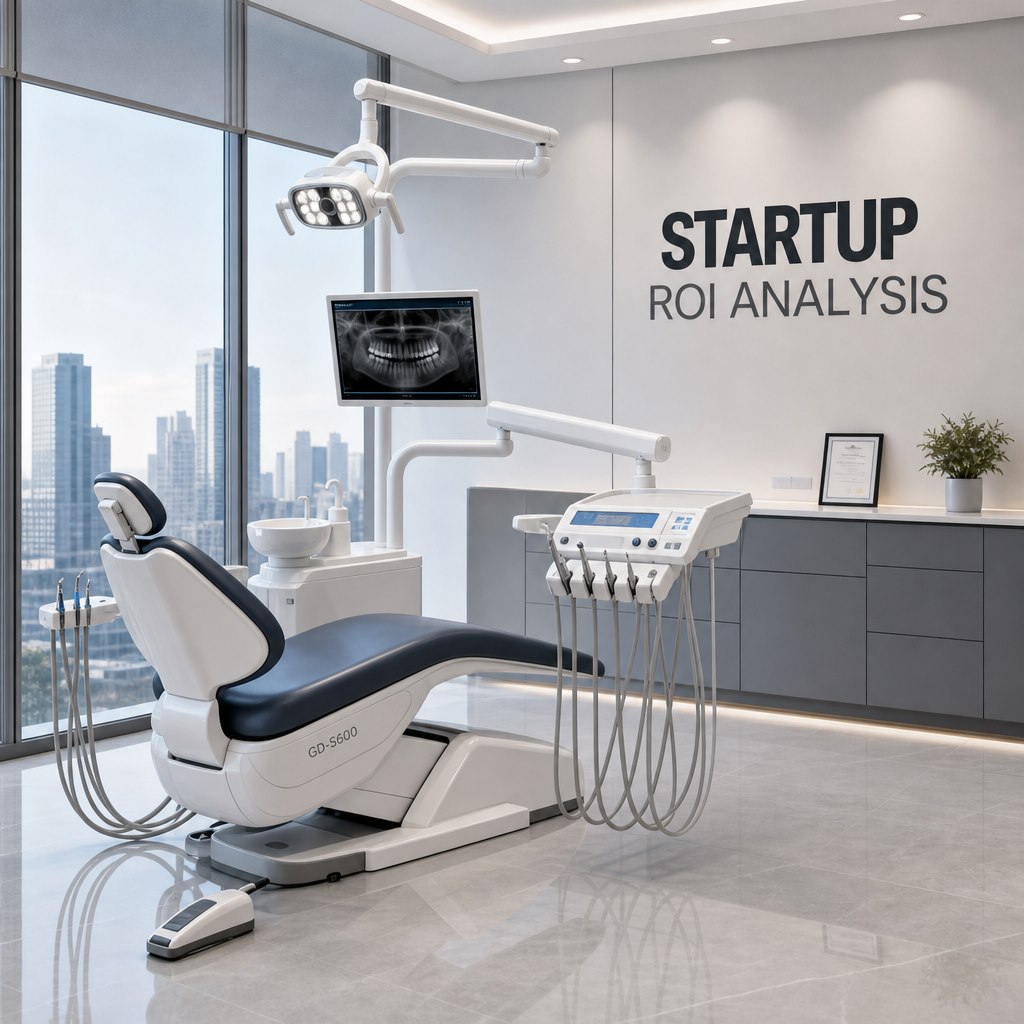
Dental chair selection is the most significant line item in your starting a dental practice budget. For clinicians navigating business loans for dentists, the GDS600 integrated hygiene hub solution by SYRJ Medical is a high-performance asset designed to maximize your dental practice loans ROI. By integrating a cast aluminum dental chair chassis with automated maintenance, we offer a one stop clinic solution provider expertise that outperforms the standard Adec dental chair lifecycle, ensuring your Dental business thrives from day one.
Launching a dental practice is one of the most capital-intensive journeys a clinician can take. Between leasing clinical space, purchasing equipment, hiring staff, and funding the first year of marketing, founders frequently discover that dental practice loans are the difference between opening on schedule and stalling at the finish line. Yet within this complex financial puzzle, one purchasing decision anchors everything else: the Dental chair. Choose the wrong unit and you do not simply inflate first-year spending — you compound maintenance costs, disrupt patient flow, and quietly erode the revenue assumptions your lender underwrote at the beginning of the journey.
This article walks through the true cost structure of a dental startup, explains why equipment specification matters to banks and financing partners, and shows how the GDS600 integrated hub from SYRJ Medical protects your dental practice loans by delivering predictable uptime, automated hygiene, and a defensible ROI narrative for the entire loan lifecycle. If you are currently comparing adec dental chair pricing against alternatives, or evaluating a cast aluminum dental chair for the first time, the financial logic below will reshape the way you think about operatory equipment.
The Real Cost Structure of a Dental Startup
Industry benchmarks consistently show that equipment accounts for roughly one-third of total startup capital in a new dental clinic. Buildout, leasehold improvements, and initial working capital consume the remainder. Within the equipment budget, the operatory delivery system and its centerpiece — the Dental chair — represent the single largest discrete purchase a founder will make. A modern treatment unit with integrated delivery, lighting, and cabinetry can absorb anywhere from fifteen to twenty-five percent of the entire equipment allocation, which is precisely why chair selection must be treated as a capital strategy rather than a routine supply purchase.
Many first-time founders make the understandable mistake of minimizing this line item. They assume that a budget chair will "get the job done" while they focus on leases, payroll, and patient acquisition. The reality is the opposite. Low-cost chairs manufactured from inferior steel alloys and fitted with generic components tend to fail inside the first twenty-four months of clinical use. When that happens, the founder faces an emergency outlay that was never in the loan budget — replacement units, extended downtime, rescheduled patients, and the reputational damage of a practice that looks unfinished to new patients. In financing terms, this is the classic "cheap now, expensive forever" trap.
Why Lenders Care About Your Chair Specification
Banks and equipment financiers underwriting business loans for dentists evaluate risk through collateral value, cash-flow coverage, and operational stability. Equipment is typically pledged as collateral, and its residual value declines with age, wear, and — critically — corrosion. A cast aluminum dental chair holds its structural integrity and resale value far better than a steel or mixed-alloy unit that begins rusting after repeated exposure to clinical disinfectants. From a lender's perspective, a clinic anchored by corrosion-resistant, automated equipment is a lower-risk borrower, which can translate into more favorable rates and terms.
Operational stability matters just as much as collateral. Lenders model a practice's ability to service debt from operating cash flow. Every unplanned maintenance shutdown interrupts that cash flow and stresses the debt-service ratio. By contrast, equipment engineered for reliability and designed for automated upkeep reduces the variance in monthly operating costs — and predictable cost structures are exactly what loan officers want to see in a startup's financial projections.
Introducing the GDS600 Integrated Hub
The GDS600 integrated hygiene hub solution from SYRJ Medical was engineered with this financial logic in mind. Rather than treating the treatment unit as a passive piece of furniture, GDS600 integrates the delivery system, the cast aluminum dental chair chassis, and automated hygiene management into a single, serviceable platform. Every component is designed to reduce the total cost of ownership across the first three years of operation — the period in which most startup failures occur and the window in which dental practice loans are most vulnerable.
The hallmark of the GDS600 is its material engineering. Cast aluminum delivers a high strength-to-weight ratio that steel simply cannot match in a clinical environment. It resists the corrosive attack of sodium hypochlorite, glutaraldehyde, and the other disinfectants that clinics use daily. The result is a chassis that does not fatigue, does not rust, and does not silently degrade the precision of the delivery arm. For a new practice, this means the chair you install on day one is still performing at specification when the first loan anniversary arrives.
Beyond the Adec Dental Chair
For decades, the adec dental chair has been the reference point for operatory quality in North American and European markets. Adec's reputation is well earned, and its lifecycle is respectable. However, the comparison becomes much more interesting when you evaluate total cost of ownership against the GDS600's integrated architecture. The table below summarizes the key performance variables that matter to a startup founder who is financing equipment through business loans for dentists.
| Performance Variable | Adec Dental Chair (Standard) | GDS600 Integrated Hub |
|---|---|---|
| Chassis Material | Steel / Mixed Alloy | Cast Aluminum (Anti-Corrosion) |
| Hygiene Management | Manual Protocol | Automated / UDB Verified |
| Startup Loan ROI | Baseline Efficiency | Estimated 75+ Labor Hrs Saved/Year |
The comparison above is not an argument against the adec dental chair as a product — it is an argument about architecture. A standard chair asks your team to manage hygiene manually, to monitor component wear by feel, and to absorb maintenance shocks as they arrive. The GDS600 automates those workflows, which changes the economics of your practice from the very first month of operations.
The 75-Hour Labor Advantage
Labor is the largest recurring expense in any dental clinic, and hygiene protocols are among the most labor-intensive routines on the schedule. Manual disinfection of delivery arms, chair surfaces, and water lines consumes measurable staff time every single day. The GDS600's automated hygiene management reduces this burden substantially, with projected savings of more than 75 labor hours per year in a typical single-operatory startup. At an average staff cost of even twenty-five dollars per hour, that is roughly two thousand dollars in annual savings — and in a startup with tight margins, every dollar of saved labor is a dollar that can service dental practice loans or fund patient acquisition.
Those 75 hours compound into other advantages as well. Fewer manual protocol steps mean fewer opportunities for protocol error, which improves infection-control compliance and reduces audit risk. The automated system also generates a consistent, verifiable hygiene record — a meaningful credential for a new practice that wants to communicate quality and safety to nervous first-time patients. In an era when patients research their dentist online before booking, a demonstrably modern, hygiene-first operatory is a genuine marketing asset.
Protecting Your Dental Practice Loans With the Right Asset
Every business loan for dentists carries a repayment schedule, and every repayment schedule depends on the practice generating consistent cash flow. The most dangerous scenario for a startup is not slow growth — it is unexpected cost spikes that break the debt-service covenant. Unplanned equipment failure is precisely such a spike. The GDS600's cast aluminum dental chair construction eliminates the two most common failure families in clinical chairs: chassis corrosion and structural fatigue. By removing those failure modes, the GDS600 stabilizes your operating cost curve during the first 36 months of growth, which is exactly the period lenders scrutinize.
There is also a strategic benefit to financing an asset with strong residual value. A cast aluminum dental chair remains a non-depreciating asset far longer than a steel unit, which keeps your equipment collateral healthy. Should your practice grow and require refinancing — consolidating dental practice loans, extending terms, or funding a second operatory — a balance sheet anchored by well-maintained, high-residual-value equipment strengthens your negotiating position. Your chair is not just furniture; it is a financing instrument.
Material Science and Startup Insolvency Risk
Startup failure is rarely a single dramatic event. It is a slow bleed of unforeseen maintenance spikes, mounting repair bills, and revenue interruptions. Material science is the quiet defense against that bleed. Steel chairs, even well-made ones, are vulnerable to pitting and corrosion where the powder coating is scratched or chipped — and in a busy operatory, scratches happen. Once corrosion begins, it spreads beneath the coating, weakening load-bearing joints and eventually compromising the precision of the delivery arm. A cast aluminum dental chair is immune to this failure cascade because the material itself resists the disinfectant chemistry of a clinical environment.
For founders financing their practice with business loans for dentists, this material advantage is a defensive capital strategy. Operational uptime is the single most important variable in the first three years of a practice's life. The GDS600's integrated design — cast aluminum chassis, automated hygiene, unified service architecture — is engineered to keep that uptime at 100 percent. When your lender reviews the practice's performance at the first annual review, the story writes itself: consistent cash flow, no equipment surprises, and an asset that still performs like new.
Buying Smart: The Online Procurement Path
Modern founders rarely travel to trade shows to source equipment. Instead, they Buy dental chair online, compare specifications across suppliers, and validate quality through references and documentation. Working directly with a dental chair manufacturer in China like SYRJ Medical removes intermediary margins and gives founders access to factory-direct pricing, custom configuration, and direct engineering support — advantages that are hard to replicate when purchasing through a local distributor.
SYRJ Medical operates as a one stop clinic solution provider, meaning you can source the treatment unit, cabinetry, lighting, and auxiliary equipment from a single accountable partner. For practices planning satellite locations or mobile outreach programs, the Portable dental chair price point from a factory-direct supplier makes expansion economically viable long before the main clinic has fully matured. And when the time comes to equip a second or third operatory, an Ergonomic dental treatment center for sale from the same manufacturer ensures clinical consistency across every room — staff training, parts inventory, and maintenance routines all stay uniform.
Conclusion: Treat Your Chair as Capital, Not Furniture
Your Dental chair is the most consequential equipment decision in your startup budget, and it deserves the same analytical rigor as your lease negotiation or your financing structure. A cast aluminum dental chair with automated hygiene — the GDS600 integrated hub from SYRJ Medical — protects your dental practice loans by stabilizing operating costs, preserving collateral value, and eliminating the failure modes that sink young practices. Whether you are comparing the adec dental chair standard, evaluating Portable dental chair price options for a satellite clinic, or preparing to Buy dental chair online for the first time, measure every option against the full cost of ownership across the loan lifecycle. The chair that keeps your operatory running at 100 percent uptime is not an expense — it is the asset that makes your financing work.
Expert FAQ: Equipment Financing & Operational Excellence
1. How does the GDS600 integrated hygiene hub impact dental practice loans approval?
Lenders favor equipment that reduces operational overhead. By integrating automated disinfection, the GDS600 lowers labor costs and compliance risks, improving the clinic's debt-service coverage ratio (DSCR), which is a key metric in business loans for dentists.
2. Is automated disinfection necessary for a new dental start up?
Yes. In 2026, health inspections for new clinics focus heavily on DUWL biofilm prevention. An automated hub ensures your starting a dental practice phase is compliant without increasing staff labor pressure or recurring maintenance spikes.
3. What is the true dental chair price when considering hygiene automation?
While the upfront cost is higher, the ROI is realized through saving ~75 labor hours annually. When you Buy dental chair online, focus on TCO (Total Cost of Ownership) rather than just the sticker price to protect your dental practice loans.
4. Can I obtain business loans for dentists for integrated clinic packages?
Absolutely. SYRJ Medical provides detailed ROI documentation that clinicians use to justify the financing of high-end integrated systems like the GD-S600 to their banking partners.
5. Which dental chair manufacturer in China offers certified hygiene hubs?
As a One-stop clinic turnkey solution provider, SYRJ Medical partners with Dental chair manufacturer in China facilities that utilize German-imported tubing and UDB architecture to meet international CE standards.
6. Expert Analysis: Why is 'Visible Hygiene' a financial defensive strategy?
As a Global Healthcare Infrastructure Consultant, I observe that startup failure often stems from unforeseen maintenance spikes and reputational damage. A cast aluminum dental chair with an automated hub acts as a 'Trust Anchor.' It eliminates chassis corrosion and manual protocol errors, ensuring 100% uptime during the critical first 36 months of growth. In the context of business loans for dentists, this is not just an equipment choice; it is a defensive capital strategy that protects your solvency and stabilizes your practice's long-term valuation.
🚀 Continue Your Research
Complete Small Clinic Setup Packages & Digital Integration →
Explore Cast Aluminum Hydraulic Dental Chair Specifications →
Ergonomic risks for dentists 2026: Modern solutions | SYRJ Medical
Dental chairs for sale: Managing dental practice startup costs via integrated hubs