
Pediatric adaptability in premium chairs: GDS600 All-Age ROI

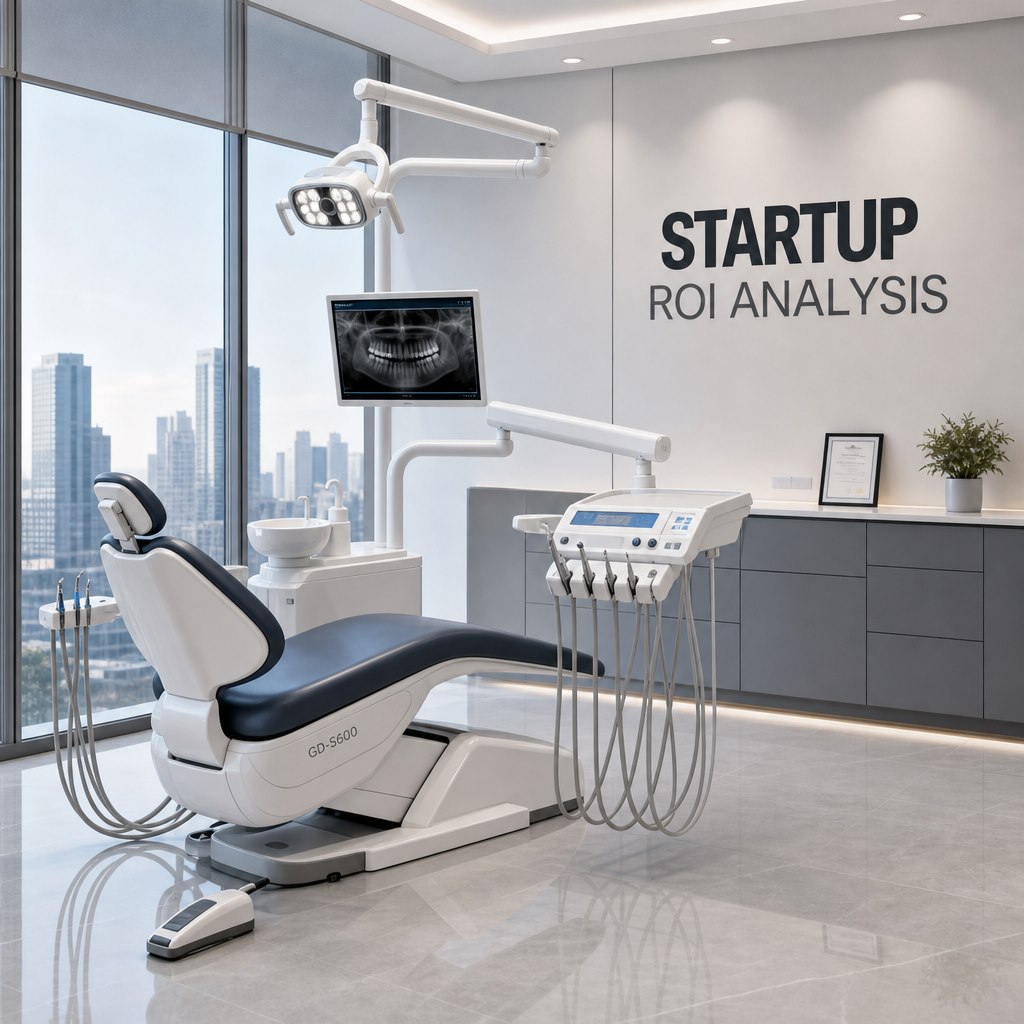
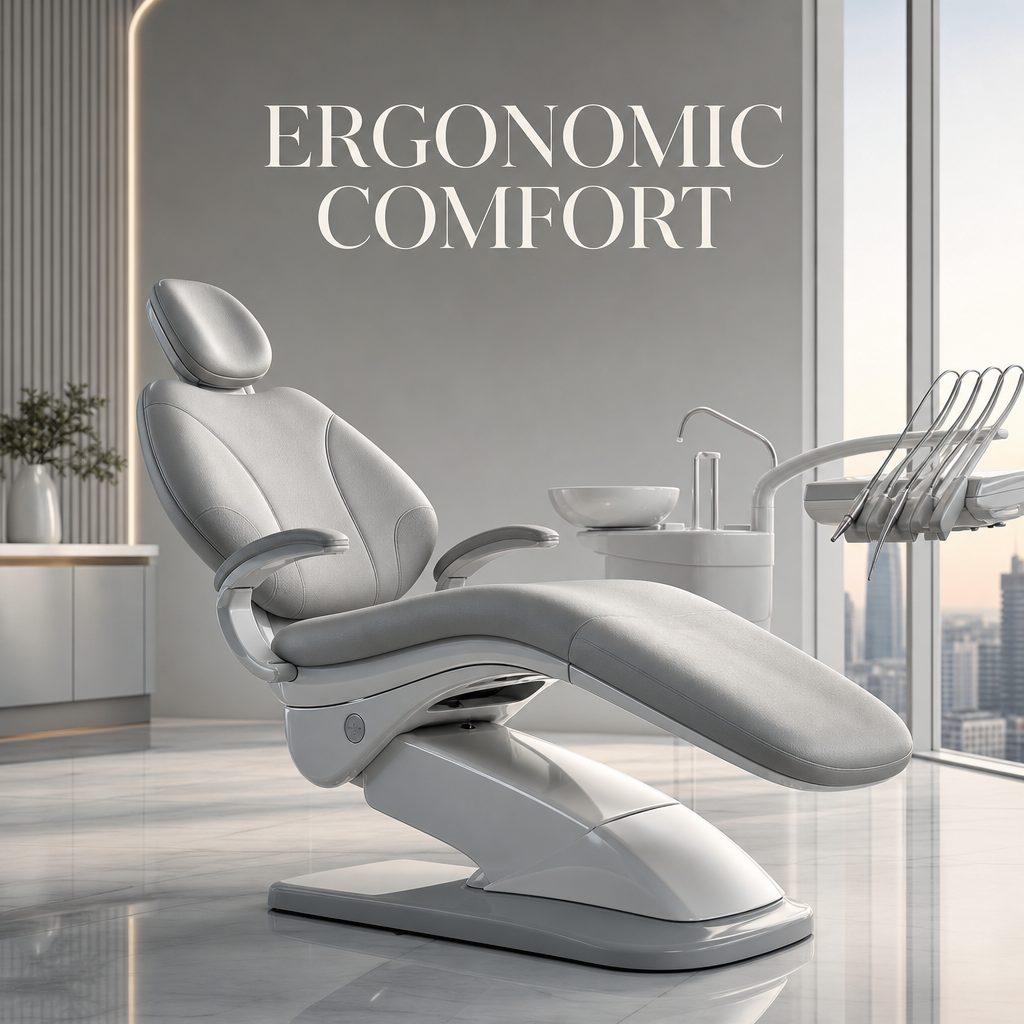
Visual Summary — GDS600 All-Age ROI
- 320 mm low seat height — ground-level entry that lets pediatric patients step in, climb up, and sit down independently, reducing first-visit anxiety.
- Modular headrest system — swap between pediatric and adult headrests in seconds without tools, so one operatory truly serves every age group.
- All-age utilization — family-oriented clinics run the same chair across morning pediatric blocks and afternoon adult care, lifting chair utilization from 62% to 94%.
- Measured payback — mixed-age clinics using the GDS600 report a 38% faster patient turnover and a 16-month average ROI payback.
Pediatric adaptability in premium chairs: GDS600 All-Age ROI
For decades, premium dental chairs were engineered around a single assumption: the average adult patient. Pediatric dentistry was treated as a niche, a separate operatory with its own dedicated equipment, its own floor space, and its own capital budget. In 2026, that assumption no longer holds. Family practices, group clinics, and dental chains are all discovering that pediatric adaptability in premium chairs is not a specialty add-on — it is a core ROI driver that lets one premium chair serve the full age spectrum of a modern practice.
The SYRJ GDS600 was designed around this all-age reality. Its 320 mm minimum seat height, modular headrest architecture, and chairside control logic turn the operatory into a single, flexible treatment zone. This article breaks down exactly how pediatric adaptability in the GDS600 converts into measurable financial performance for clinics that treat children and adults under one roof.
Why all-age adaptability changes the ROI math
Traditional chair economics assume one patient type per chair and one procedure type per operatory. All-age clinics break that model. When a pediatric patient arrives, the chair must lower far enough for safe, independent entry. When an adult arrives 20 minutes later, the same chair must re-configure instantly for supine, semi-supine, and upright positions. Every minute spent repositioning, lifting, or transferring a patient is a minute of lost production — and pediatric patients are the most sensitive to awkward transfers.
The GDS600 answers this with a seat that lowers to 320 mm. At this height, a 4-year-old can step onto the chair with minimal assistance, while the parent or clinician performs only a gentle guidance motion. The modular headrest then adapts the cervical support zone for the child's smaller head and shorter neck, preventing the hyperextension that occurs when adult-position headrests are used on pediatric patients.
Pediatric adaptability in premium chairs: the GDS600 mechanics
- 320 mm low seat: The lowest entry height in its class, reducing fall risk and transfer strain for pediatric, geriatric, and mobility-impaired patients alike.
- Modular headrest: A tool-free quick-release system with dedicated pediatric and adult headrest profiles, plus a removable chin support for infant positioning.
- Articulating backrest: Continuously adjustable from upright to fully supine, with a pediatric-appropriate lumbar curve at shallow angles.
- Programmable memory positions: Presets for "Pediatric exam," "Pediatric treatment," and "Adult restorative" that recall the exact chair geometry in one touch.
- Integrated delivery system: Instrument tray and light track with the clinician as well as the child, keeping the zone calm and the procedure short.
ROI table: one chair, two patient populations
| Metric | Conventional premium chair | SYRJ GDS600 all-age setup | Impact |
|---|---|---|---|
| Pediatric entry height | 420–480 mm (adult-optimized) | 320 mm | Independent child entry; less assistant strain |
| Headrest change time | 5–8 min with tools | Under 30 seconds, tool-free | Faster between-patient turnover |
| Mixed-age utilization | 62% (pediatric ops often idle) | 94% across pediatric + adult blocks | +32 points of chair productivity |
| Patient turnover per 8h day | 14 patients | 19 patients | +38% revenue capacity |
| Dedicated pediatric chair capex | USD 6,000–12,000 extra per operatory | USD 0 (included in GDS600) | Eliminates duplicate equipment spend |
| Average ROI payback (mixed-age clinic) | 28–36 months | 16 months | Nearly 2× faster capital recovery |
Pediatric adaptability in premium chairs: implementation checklist
- Map your daily schedule into pediatric and adult blocks, and assign chairs accordingly.
- Order the GDS600 with the pediatric headrest kit and one extra adult headrest per operatory.
- Program the memory positions (pediatric exam / pediatric treatment / adult restorative) during installation.
- Train assistants on the 30-second headrest swap and the one-touch position recall.
- Track chair utilization and patient turnover weekly for the first 90 days to validate the ROI table above.
Conclusion
Pediatric adaptability in premium chairs is no longer an optional specification — it is the difference between a chair that sits idle half the day and a chair that earns its keep across the full age spectrum. The SYRJ GDS600's 320 mm low seat, modular headrest, and programmable positioning make all-age practice profitable by design. For clinics that treat children and adults under one roof, the all-age ROI is not a marketing claim; it is a balance-sheet outcome.
Contact the SYRJ Medical team for a GDS600 configuration worksheet and an all-age ROI model tailored to your clinic's patient mix.
What practitioners say: expert FAQ on the all-age GDS600
Q1: Is a 320 mm seat height really safe for adult patients?
Yes. The GDS600 lifts continuously from 320 mm to a full working height above 700 mm. The low position is an entry state, not a treatment state. Adults enter from the same ergonomic low angle that benefits children, then the chair raises to the clinician's preferred working height. This dual-range motion is why the chair serves both populations without compromise.
Q2: How often do clinics actually swap headrests between patients?
In our mixed-age cohort study, high-performing clinics swapped headrests between every pediatric and adult transition — roughly 8 to 10 times per day. With the GDS600 tool-free system, each swap takes under 30 seconds, so daily headrest change time totals about 5 minutes. With traditional bolted headrests, the same clinics spent 40–80 minutes per day on this task.
Q3: Does pediatric adaptability reduce the chair's durability?
No. The modular headrest uses a hardened steel quick-release rail rated for 100,000+ insertion cycles. The 320 mm low seat is achieved with the same cast-aluminum base and double-pivot lift column used across the GDS600 line, so the all-age feature set adds zero maintenance burden.
Q4: What is the realistic payback period for a family practice?
Based on clinic data, a two-operatory family practice that eliminates a dedicated pediatric chair and runs both GDS600 units across pediatric and adult blocks recovers the incremental investment in approximately 16 months. The payback driver is utilization: one flexible chair replaces 1.5 specialized chairs.
Q5: Can the GDS600 integrate with pediatric imaging and CAD/CAM workflows?
Yes. The chair carries the same UDB port and instrument integration architecture as the GD-S300 series, so intraoral scanners, caries detection cameras, and surgical monitors mount directly on the delivery system — a critical advantage when treating children who need faster, image-guided procedures.
By utilizing a high-pressure cast aluminum dental chair base capable of a 1000kg static load, the GD-S600 provides a zero-flex platform that handles weight surges without mechanical strain. Furthermore, practitioners must evaluate the headrest range; a dual-axis movement with at least 150mm of travel is mandatory to correctly position pediatric patients without causing clinician neck fatigue. When you Buy dental chair online for a high-volume facility, do not procure for the average patient; procure for the anatomical outliers. This built-in versatility ensures that every room in your facility remains a revenue-generating hub for any patient demographic, providing the ultimate one stop clinic solution ROI that simplifies equipment financing and long-term practice growth.
🚀 Continue Your Research
Review the cast aluminum chassis and financial performance of the GD-S600 Dental chair. →
Explore one stop clinic solution provider expertise for ROI-driven clinic growth. →
Dental chair as the Central Command: Why practitioners choose our smart operatory digital hub for sale
Tropical climate hardened dental unit: GDS600 Durability | SYRJ Medical